Uniqlo UK at a Glance
For a UK shopper building an everyday wardrobe, the most useful starting point is not a blanket verdict on the whole Uniqlo range. It is a repeatable way to check whether a particular item is likely to suit their measurements, care routine and willingness to keep it return-eligible while deciding.
The official material available for this guide covers three practical areas: how to take body measurements and read size information, how to look after selected garment types, and the conditions and deadlines for returns and exchanges. That is enough to support a cautious shopping process for basics. It is not enough to settle every question a shopper may have about a specific garment.
In particular, these sources do not amount to independent product testing, a full range comparison, or a current price and availability guide. A useful reading of Uniqlo UK is therefore procedural: it can suit shoppers who are prepared to use the retailer’s measurement guidance, review the relevant care instructions and check the return terms before wearing or washing an item.
That approach is especially sensible when buying familiar wardrobe categories where a small difference in cut, fabric blend or intended fit can matter more than the brand name alone. Start with the product page, then use the official guidance as a way to reduce avoidable sizing and aftercare surprises.
Where Uniqlo's Everyday Wardrobe Offer Is Strongest
The clearest documented strength is the amount of practical guidance available around choosing and maintaining clothing. Uniqlo’s UK sizing help covers how to take body measurements, how to measure clothing, and size-chart routes for men, women, kids and baby products. Its clothing-measurement guidance also points shoppers towards category-specific measurement help for tops, bottoms, bras, shoes and accessories.
This matters for everyday purchases because it encourages a more useful comparison than choosing a size label by habit. A shopper can compare their own body measurements with the relevant chart, then look at garment measurements where those are provided. That will not guarantee that a cut feels right, but it creates a clearer basis for deciding whether to order one size, compare two sizes, or avoid treating a previous purchase as an exact match.
The care guidance is similarly practical rather than generic. The UK help material offers dedicated care routes for denim, Ultra Light Down, Extra Fine Merino, cashmere, PUFFERTECH, outerwear, children’s padded jackets, linen and clothing storage. For someone assembling a wardrobe that will be worn repeatedly, the availability of fabric- and category-specific instructions can make care planning easier before purchase.
That is most useful when the item needs a routine different from an ordinary mixed wash. Denim, down, merino, cashmere and linen all have their own care pages in the supplied Uniqlo material, so a shopper can check the relevant guidance before committing to a garment they may not want to wash or store in the same way as their other basics.
These tools should be treated as decision support, not as proof that every product has the same fit, durability or finish. Their value lies in helping shoppers ask more precise questions at item level: what should I measure, what kind of care will this need, and am I comfortable with that routine?
Where the Evidence Leaves Trade-offs Unresolved
The supplied information is useful, but it has firm limits. It does not independently establish how a particular fabric performs after repeated wear, whether a given style runs large or small in practice, how an item compares with alternatives, or whether its current price represents good value. Those questions need a product-level check and, where relevant, evidence beyond the official guidance supplied here.
Size information also needs to be read in context. Uniqlo says that it revised its women’s body-measurement size chart from the Fall/Winter 2025 product lineup to help customers select an appropriate size. The same source says that there were no significant changes to the size of products customers had purchased previously. That does not mean every new garment will fit identically to an older favourite: cut, item measurements and the intended silhouette can still vary by product.
Care guidance has a similar boundary. The existence of a care page for a material or category tells a shopper that Uniqlo publishes instructions for it. It does not, by itself, prove that a particular item will meet an individual’s expectations for softness, warmth, longevity, ease of laundering or value.
Returns should not be treated as a substitute for checking first. The policy provides a route for eligible items, but the conditions require shoppers to preserve the item’s returnable state. If fit is uncertain, compare measurements and inspect the exact product information before removing tags, wearing, washing or disposing of packaging.
The practical takeaway is simple: use the official tools to narrow the risk, then verify the details that belong to the exact item and order. Check product measurements, care information, exclusions and the deadline shown in your purchase history rather than assuming that a general guide answers them all.
How to Check Fit, Care and Returns Before You Buy
AI-generated generic editorial illustration — not a retailer product photo and does not depict the reviewed product or service. Illustration supporting this section.
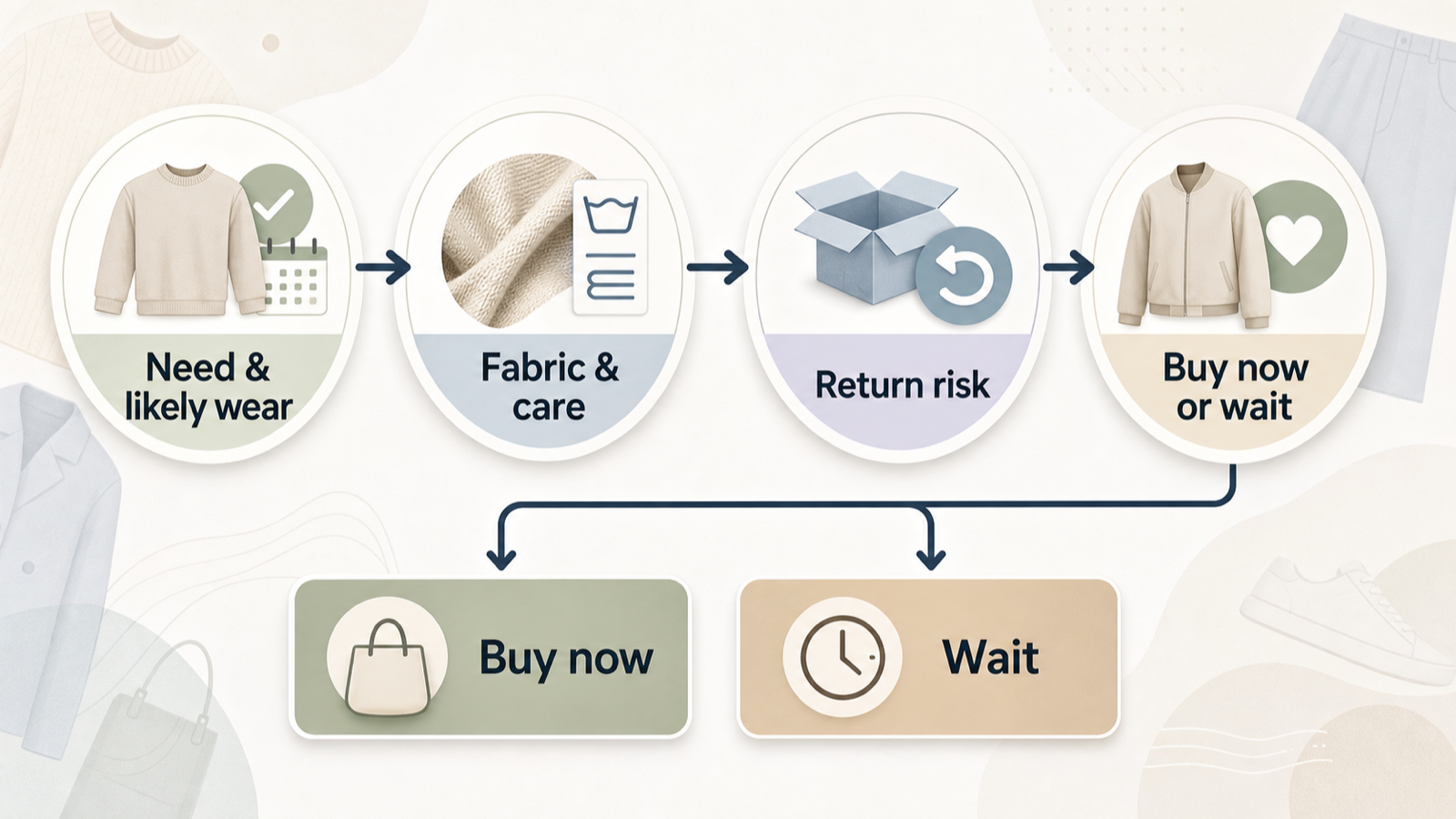 A cautious purchase sequence can make an everyday basic easier to assess.
First, take your body measurements using the retailer’s measurement guidance. Then compare them with the relevant size-chart information rather than relying only on the letter or number you usually buy. If the product page gives garment measurements, compare those as well. Body measurements help identify a likely size; garment measurements can help you judge the finished dimensions of the item itself.
Second, read the care instructions for the material or category before ordering. This is particularly worthwhile for denim, Ultra Light Down, Extra Fine Merino, cashmere, linen and outerwear, all of which appear in Uniqlo’s UK care guidance. Ask whether the suggested washing, hand-washing, storage or maintenance routine fits how you actually manage your wardrobe. A garment can be appropriate on paper yet inconvenient if its care needs do not suit your habits.
Third, if you order while unsure about fit, protect your return options while you decide. Under the documented UK policy, store purchases must be returned within 30 days of the purchase date, while online orders must be returned within 30 days of receiving the product. For online purchases, Uniqlo says the return due date is displayed in purchase history.
Finally, keep the item in the documented eligible condition until you have made a decision. The policy says items must be unused and unwashed, and complete with original packaging, tags, labels and accessories intact and undamaged. It also notes that items must not fall into the listed categories that are ineligible for exchange or return. Check the current item-specific conditions before acting.
Before placing an order, compare your measurements, read the relevant care guide and confirm the return conditions for that item.
Frequently Asked Questions
How can I check which Uniqlo size is most likely to fit me?
Use Uniqlo’s guidance on taking body measurements, then consult the applicable size chart. Where available, also compare garment measurements for the item you are considering. The official sizing information includes routes for men, women, kids and baby products, as well as measurement guidance for categories such as tops and bottoms. For women, note that the body-measurement chart was revised from the Fall/Winter 2025 lineup; check the current chart for the item rather than relying solely on an older purchase.
What Uniqlo clothing care guidance is available for fabrics and outerwear?
The supplied UK care page includes guidance for denim, Ultra Light Down, Extra Fine Merino, cashmere, PUFFERTECH, outerwear, children’s padded jackets, linen and clothing storage. Use the guide that matches the fabric or category you are considering, then follow the item’s own care information where it is provided. These resources explain care options; they are not independent evidence of how every product will perform over time.
How long do I have to return an Uniqlo UK online order?
The documented policy says online orders can be returned within 30 days of receiving the product. Uniqlo also says the return due date is displayed in purchase history. Check that date and any current item-specific restrictions before arranging a return, especially if delivery timing or an exclusion could affect eligibility.
What condition must an item be in for a Uniqlo return or exchange?
According to the supplied policy, an item must be in its original condition: unused, unwashed, and complete with original packaging, product tags, labels and accessories intact and undamaged. It must also not be in a category listed as ineligible for exchange or return. If you are still deciding on fit, keep all packaging and tags in place and verify the exact conditions before wearing or washing the item.
Recheck current product details, measurements, delivery terms and return conditions before ordering.
Keep the final choice tied to the exact item and your own priorities.
Sources
Related reading
- Best UK high-street brands for wardrobe essentials: evidence-led top choices
- Marks & Spencer vs Uniqlo: which is better for everyday wardrobe basics?
- Next clothing review: sizing, buying conditions and everyday value assessed
- How to choose everyday clothing: fit, fabric, care and returns checked in order
Editorial information: About our editorial team · Read our editorial policy · Read our affiliate disclosure.