Next’s public information is most useful as a planning tool for UK shoppers, particularly when choosing women’s sizes and trouser lengths online. Its published size guide gives body measurements in centimetres and inches, while its help area visibly links to delivery information, arranging a return and customer services. That is a helpful starting point, but it is not independent evidence that every garment will fit the same way, wear well or represent good value for every wardrobe.
Evidence Scope and Review Approach
This review considers what Next’s supplied first-party pages can responsibly show: the structure and detail of its women’s sizing guide, and the purchase-support routes visible in its public help area. The sizing material covers tops and dresses, jeans and trousers, plus footwear and accessories. It includes measurements such as bust, waist and hips, and it sets out several trouser-length options.
The help page visibly offers links for delivery information, arranging a return, frequently asked questions, live chat, store finding and customer services. Those links make it easier to locate support before ordering, but the supplied excerpt does not establish the current eligibility rules, time limits, charges or exclusions for a specific return. Check the relevant help pages and the product page at the point of purchase.
The result is a practical referral guide rather than a hands-on test. It can help you make a more informed shortlist, but it cannot verify fabric feel, durability, colour accuracy, garment-specific cut or personal value.
Women's Sizing and Fit Guidance
 For everyday wardrobe shopping, the strongest part of the available Next information is its women’s size guide. For tops and dresses, it maps UK sizes 4 to 26 to bust, waist and hip measurements, with tables in both centimetres and inches. That gives shoppers a clear comparison point if they already know their body measurements or have a garment at home whose fit they like.
Start with a fresh set of measurements rather than relying only on the size printed in another brand’s clothing. Measure your bust, waist and hips, then compare the results with the relevant Next table. If your measurements sit across more than one size, treat the chart as a starting point and look for garment-specific information before deciding. A fitted dress, a loose shirt and a structured blazer can all use the same body chart while allowing very different amounts of ease.
Jeans and trousers have an additional practical choice: length. Next’s guide lists Petite, Regular, Long, Extra Long and Tall options, alongside stated height ranges and inseam lengths. The listed inseams are 69cm, 74cm, 79cm, 84cm and 89cm respectively; the guide also provides inch equivalents. This is useful when a standard length regularly bunches at the ankle or falls short, because it separates leg-length selection from the main clothing-size decision.
The footwear and accessories section is also more detailed than a simple UK-size conversion. It includes foot length and, for the displayed shoe table, standard, wide and extra-wide width information where available. If shoes are part of the order, measure foot length and check the width notation rather than assuming that your usual UK size will translate identically.
Use the size guide to narrow the range, then read the individual product listing for the details that affect the item you are actually considering. The published measurements can make an online purchase less speculative; they do not guarantee a particular fit outcome.
What the Sizing Guide Cannot Tell You
A body-measurement chart answers a different question from a garment-fitting test. It can show the measurements Next uses for its women’s size ranges and the leg-length choices it publishes, but it cannot tell you how a particular fabric will stretch, drape, recover after wear or feel against the skin. Nor can it show whether a garment has a deliberately oversized, close-fitting, cropped or tailored design unless that information appears on the relevant product page.
That matters most when you are trying to replace a wardrobe staple. Two items labelled with the same size may suit different preferences depending on their pattern, fabric construction and intended silhouette. A shopper who prefers room through the hips, extra sleeve length or a less restrictive waist should not treat a generic chart as a promise that every item will meet that preference.
Before ordering, check the product page for its stated fit, composition, care information, available lengths or widths, and any other item-specific details shown there. Compare those details with an item you already own and wear often. It is also sensible to check the selected colour, size and delivery information again at checkout, especially when building a multi-item order.
In short, the guide reduces one important uncertainty—body-size selection—but it does not independently establish quality, longevity or value. Those are personal and garment-specific judgments that need more information than the supplied sizing tables provide.
Returns and Buying Conditions to Check
Next’s public help area visibly includes an Arrange A Return route, as well as links for Delivery Information, Frequently Asked Questions, live chat, a store locator and customer services. This makes the support pathway easy to identify before you buy, which is particularly useful if you are ordering several possible sizes or lengths.
Use those routes as a pre-purchase check rather than assuming the same conditions apply to every item or order. The supplied help-page excerpt confirms that the links are present, but it does not set out the live terms for a particular purchase. Before committing, open the current return and delivery guidance and verify the details relevant to your basket, delivery location and item type.
Questions worth checking include whether your item category has any special handling, what process applies if the fit is unsuitable, and which support channel you would use if an order needs attention. If you expect to compare sizes at home, make the return pathway part of the cost-and-convenience calculation rather than an afterthought.
The same principle applies to buying conditions more broadly. Confirm the final product selection, delivery information and any checkout details shown for your order. If anything is unclear, Next lists live chat and a customer-services telephone number in the visible help-page navigation, giving you a direct route to seek current clarification.
A Practical Next Purchase Checklist
AI-generated generic editorial illustration — not a retailer product photo and does not depict the reviewed product or service. Support a cautious pre-purchase checklist that combines measurement and returns-pathway checks.
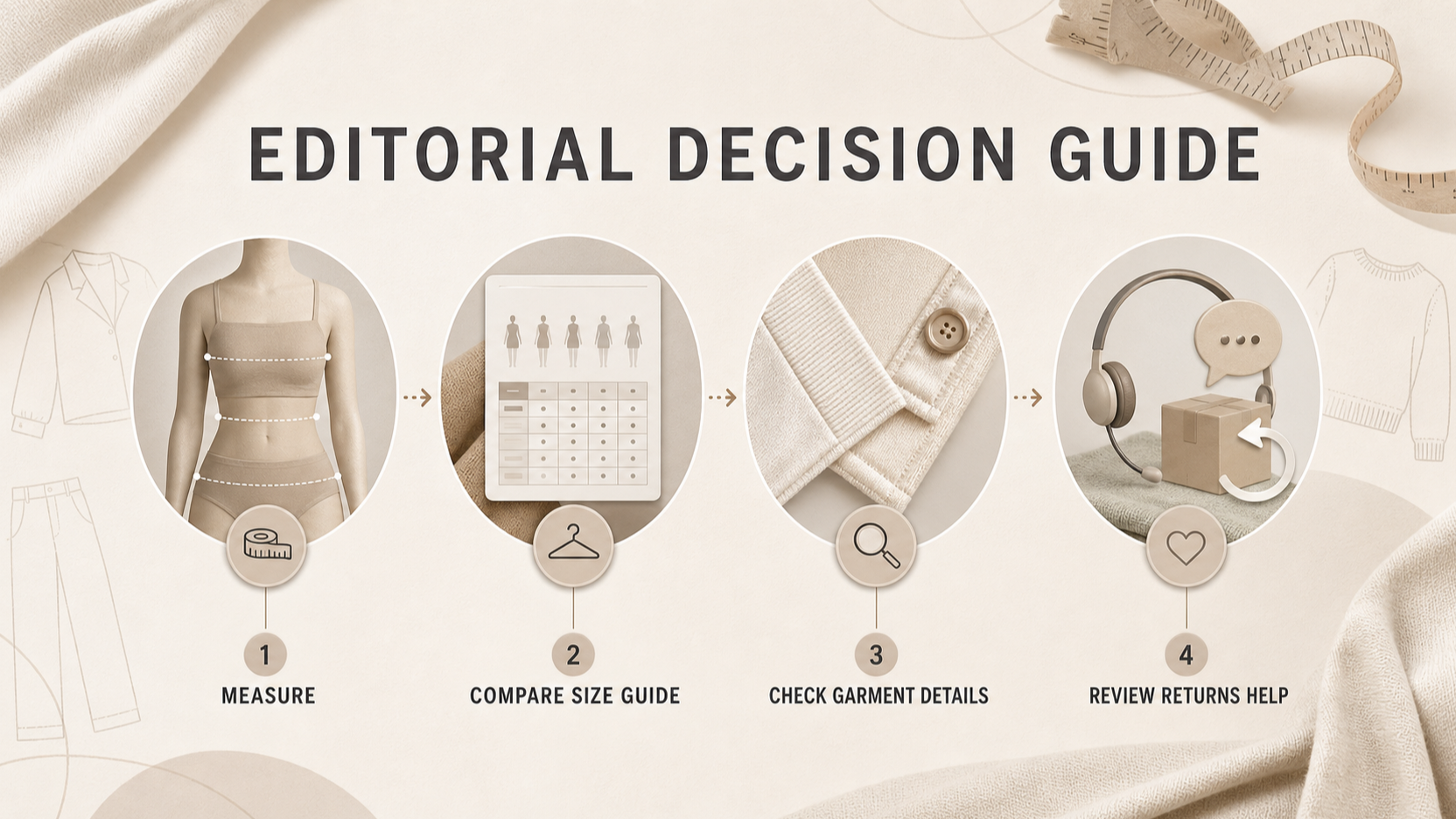 Use this short sequence to decide whether a Next item is worth ordering for your own wardrobe:
Define the job the item needs to do. Is it replacing a well-worn basic, filling a gap in a capsule wardrobe or adding an occasional piece? A clear use case makes it easier to judge whether another colourway or style would be more useful.
Measure first. Record bust, waist and hips for tops and dresses. For jeans and trousers, compare your height and preferred inseam with Next’s published Petite, Regular, Long, Extra Long and Tall options.
Match the right guide to the category. Do not use a dress-size assumption for footwear. Next’s published women’s guide separates clothing, trousers and footwear/accessories, so use the section that matches the item.
Read the product-specific information. Check the product page for fit, composition, care and any details that could change how the item works with clothes you already own. The general size guide cannot settle those questions by itself.
Compare value in your own terms. Consider expected wear, styling versatility, care effort and the cost alongside alternatives already in your wardrobe. A lower-priced item is not automatically better value if it will rarely be used; an item with a clear role may be easier to justify.
Check support before checkout. Review the current delivery and return help pathways for the order you are about to place. Next’s help page provides visible links to both areas, plus live chat and customer services if you need clarification.
This approach keeps the decision proportionate. Next’s published sizing information can make the first choice more informed, while the product page and current help routes cover the details that a general guide cannot prove.
Frequently Asked Questions
Does Next provide a women's clothing size guide?
Yes. The supplied Next Help Centre page is titled “Women’s Sizing Guides” and presents sizing information for women’s tops and dresses, jeans and trousers, and footwear and accessories.
What measurements does Next's women's size guide use?
For tops and dresses, the guide lists bust, waist and hip measurements. It presents the table in both centimetres and inches for UK sizes 4 to 26. Use your current measurements to compare against the relevant table.
Does Next list different trouser leg lengths?
Yes. The women’s jeans and trousers guide lists Petite, Regular, Long, Extra Long and Tall options. It also shows stated height ranges and corresponding inseam lengths in centimetres and inches.
Where should I check Next's return information before ordering?
Start with Next’s public help area, which visibly includes an “Arrange A Return” link and a Delivery Information link. Open the current pages before checkout to confirm the conditions that apply to your particular order; the supplied excerpt does not provide the complete live return terms.
Can the size guide tell me whether a particular item will fit perfectly?
No. It is useful for comparing body measurements and choosing a starting size or trouser length, but it cannot confirm the fit, feel, stretch, drape or quality of a specific garment. Check the product page and make your decision according to your own fit preferences.
Sources
Related reading
- Uniqlo UK clothing review: who it suits and where the trade-offs sit
- John Lewis fashion review: range, buying guidance and return terms assessed
- How to choose everyday clothing: fit, fabric, care and returns checked in order
- When to buy clothes for better value: need, season, care and return risk compared
Editorial information: About our editorial team · Read our editorial policy · Read our affiliate disclosure.