John Lewis gives UK shoppers visible routes into women’s and men’s fashion, alongside sale and seasonal discovery pages. That makes it a practical place to start a wardrobe search—but the final decision should happen at product level, where you can check the exact fabric, measurements, availability, price and current returns terms.
What this John Lewis fashion review covers
This review looks at what can responsibly be assessed from the supplied public John Lewis storefront evidence: how a shopper can begin browsing, how promotional and seasonal routes can support discovery, and which questions remain open until you inspect a specific product or policy page.
The public navigation shows dedicated Women and Men departments, as well as Sale & Offers and Holiday & Travel. That is useful evidence of broad entry points for a fashion-led search. It is not evidence that every wardrobe need is covered, that a preferred size is available, or that one fit approach is consistent across brands.
The distinction matters because retailer-level navigation answers a different question from a product page. Navigation can show where to start; it cannot tell you whether a particular jacket is lined, whether trousers run long, whether a knit needs specialist care, or whether a return is accepted under your circumstances.
Use this guide as a shopping framework rather than a substitute for current product and policy information. Before spending, compare the relevant item pages and read the applicable terms in full.
Fashion range and browsing starting points
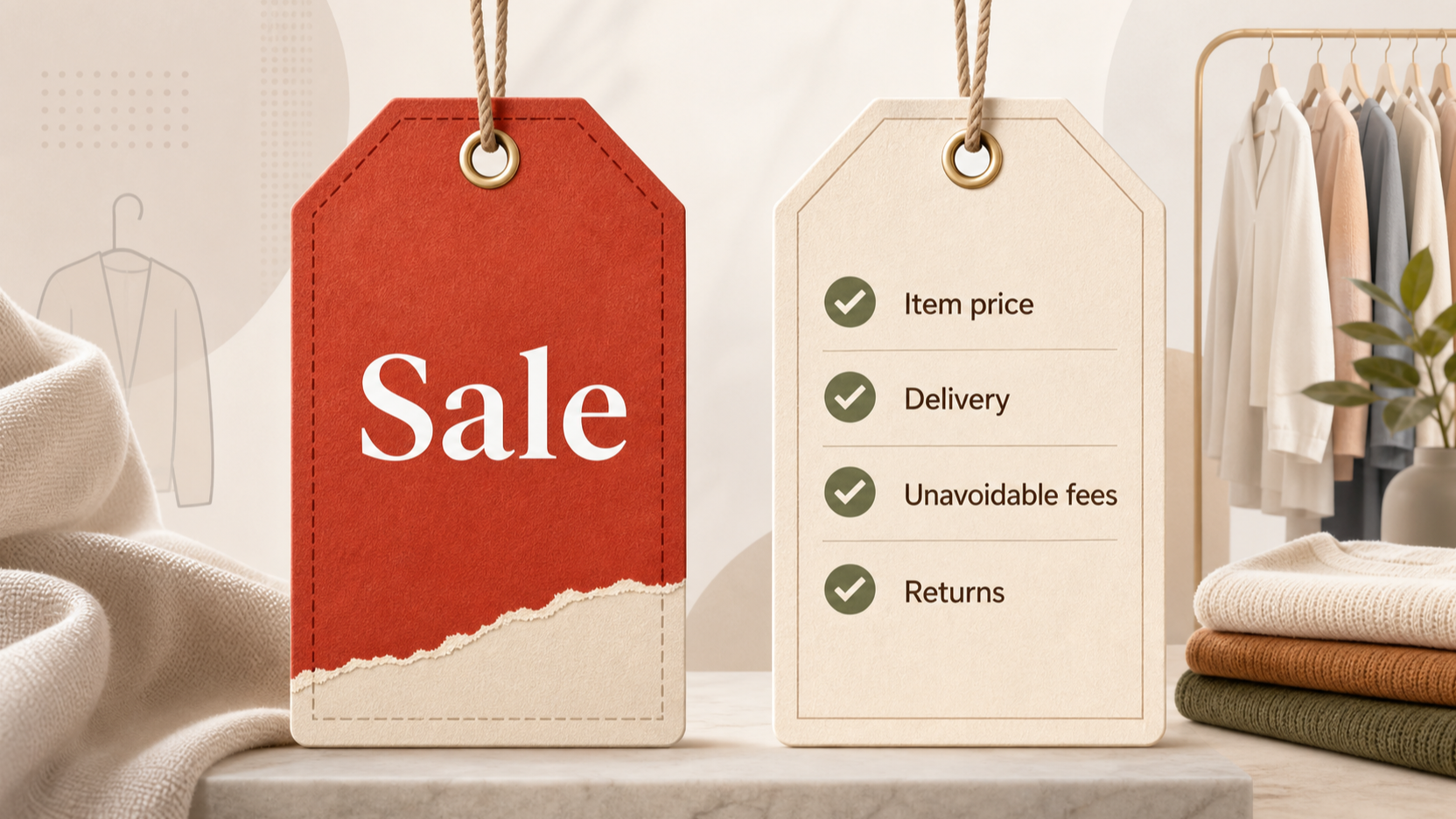 For an initial browse, the clearest route is to choose Women or Men from the main John Lewis navigation, then narrow the search around the garment or occasion you actually need. The same storefront also surfaces Sale & Offers, Holiday & Travel, beauty, sport and other departments, so fashion shopping can sit within a wider seasonal or trip-planning search.
That structure can be especially helpful when your starting point is broad: replacing everyday basics, finding holiday outfits, or comparing a couple of possible outfit directions before deciding what deserves a closer look. Begin with a purpose, not a promotion. For example, search for “work trousers”, “lightweight knit” or “holiday shirt”, then compare several individual listings on the same criteria.
A sensible first pass is to make a short comparison list and record:
- the brand and item name;
- the available sizes and colour choices at the time you check;
- the fabric composition and care instructions;
- the full current price, including whether the displayed price is promotional; and
- the delivery, collection and returns information shown for that item.
Visible women’s and men’s routes are a strength for discovery, but they do not demonstrate depth of choice within a category, reliable stock, consistent sizing or suitability for a particular body shape. Treat them as starting points, then let the product details do the decision-making.
Using offers and seasonal edits carefully
John Lewis prominently links to sale and offer content, and the supplied storefront includes a seasonal holiday-shopping prompt alongside fashion-related reductions. These routes can be useful when you already know the type of item you need and want to see whether relevant lines are currently featured.
They are less useful as a reason to buy on their own. A sale label does not establish that an item is the best value for your wardrobe, that the original price is the right comparison point for you, or that the item will be available in your preferred size. Promotional copy can change quickly, too.
Use an offer page as a discovery tool, then slow down. Compare the reduced item with a full-price alternative that has the same job: similar fabric, silhouette, care burden and expected frequency of wear. If the lower price only makes sense because you are adding an item you would not otherwise choose, it may not be a saving in practical terms.
Seasonal edits can also help you form a shortlist. For holiday clothing, ask whether a piece will work after the trip; for a trend-led item, decide in advance how many existing outfits it can join. This keeps promotional browsing tied to a real wardrobe gap rather than urgency created by a banner.
Fit fabric and care checks before buying
AI-generated generic editorial illustration — not a retailer product photo and does not depict the reviewed product or service. Illustration supporting this section.
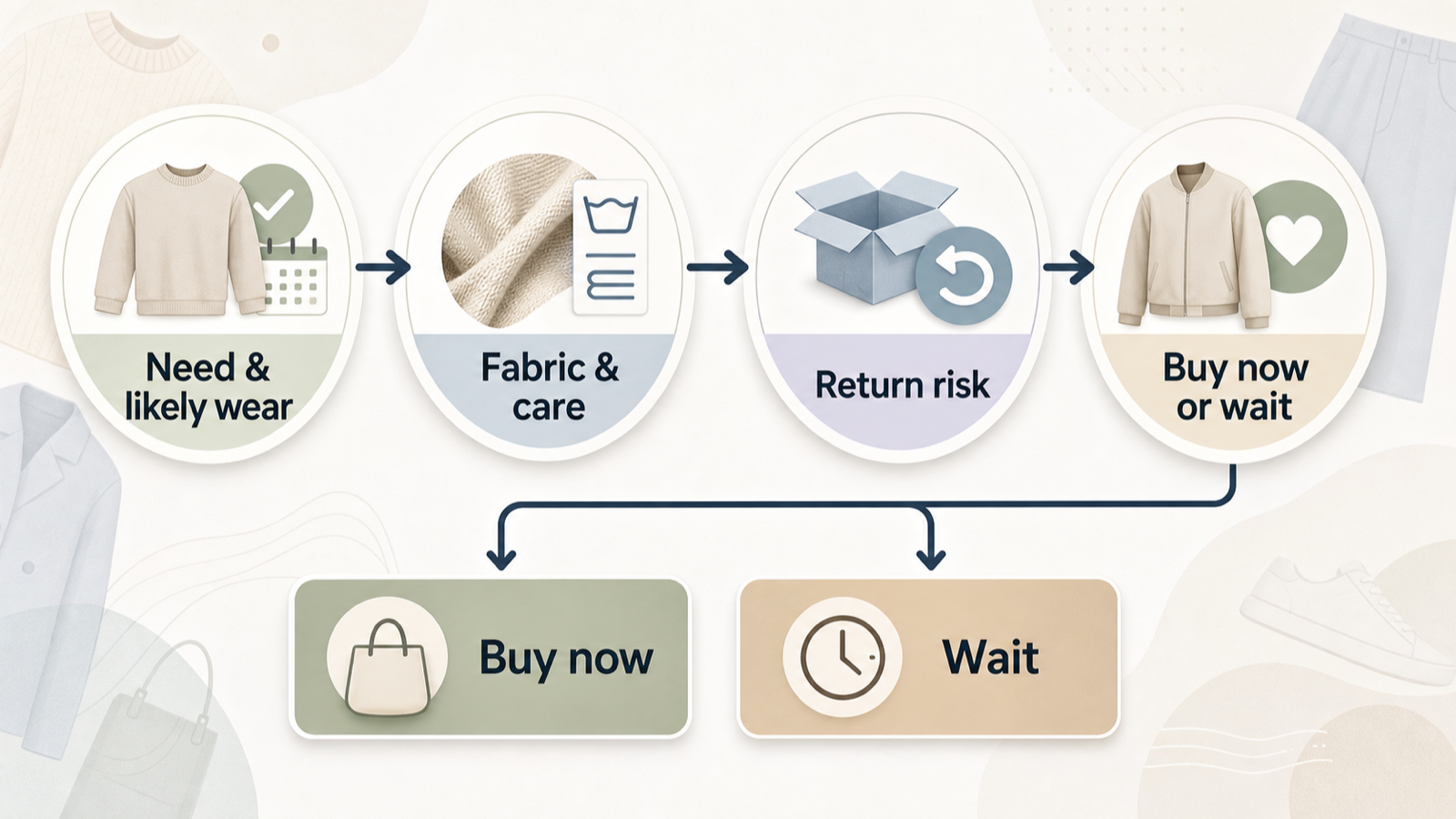 A retailer-level review cannot establish whether a particular garment will fit you well or meet your care preferences. Those questions belong on the individual product page, where the details may vary by brand, cut, colour and fabric blend.
For fit, compare the listed size guidance with measurements you have taken at home. Focus on the measurements that matter for the garment: chest and shoulder for a shirt or jacket, waist and rise for trousers, and length for dresses, skirts and outerwear. If the page includes model information, use it only as context; it is not a substitute for your own measurements.
For fabric, look beyond a headline material. A garment described as cotton, wool or linen may also contain fibres that change stretch, feel, opacity, warmth or drying time. Check the full composition, then ask whether it suits how you plan to wear it. A low-maintenance everyday layer and an occasional special-occasion piece may justify very different compromises.
Care is part of value. Before purchasing, note whether the item can be machine washed, needs a particular temperature, requires reshaping or ironing, or calls for professional cleaning. Consider whether that routine fits your life and whether you have similar items already. If key information is absent or unclear, contact John Lewis or choose only after you can verify it from current official product information.
Returns information that needs current policy verification
Do not assume a standard return window, cost, collection option or eligibility rule from this review. The supplied evidence does not confirm current John Lewis returns terms for fashion purchases.
Before placing an order, open the retailer’s live returns information and check the policy that applies to your delivery location and item type. Then confirm the product-page information for any exclusions or conditions. The details worth checking include the time limit, the item’s required condition, original packaging or tags, the available return methods, any charges and the refund route.
This is especially important when you are buying several sizes to compare, ordering a sale item, choosing occasionwear or purchasing something that may have hygiene, personalisation or other restrictions. Keep the order confirmation and do not remove tags or use the item beyond a careful fit check until you understand the applicable terms.
A current policy check is not an optional final step. It is part of comparing the true cost and risk of an online clothing purchase.
What the available evidence cannot confirm
The supplied evidence supports a limited conclusion: John Lewis publicly presents women’s and men’s fashion entry points and promotional routes. It does not establish the quality, breadth, stock reliability, fit consistency, price competitiveness or returns experience of its fashion range as a whole.
It also does not support a claim about a particular garment’s construction, fabric performance, washability, longevity or value. Those characteristics can vary substantially between products and brands, even within the same retailer. Likewise, a page from an unrelated home category should not be used to infer anything about clothing stock, clothing quality or fashion policies.
For a practical comparison, check the products you are genuinely considering on the day you plan to buy. Compare their current price against alternatives that meet the same need, not merely against a retailer-wide impression. Look for the exact size availability, composition, care instructions, delivery estimate and return conditions.
If a decision depends on a policy detail or a promised feature that you cannot find in current official information, pause rather than filling the gap with an assumption.
Who should consider John Lewis for everyday wardrobe shopping
John Lewis may suit shoppers who want a single public storefront from which to begin browsing women’s or men’s fashion, explore seasonal prompts and then compare specific options carefully. It is most useful when you approach it with a defined wardrobe need and are prepared to verify the details that matter to you.
It may be a good starting point if you want to compare items across more than one fashion brand or build a shortlist around an upcoming trip, work requirement or everyday replacement. The visible sale and seasonal routes can make discovery quicker, provided that you do not treat them as proof of value.
It is less suitable as a shortcut for shoppers who need certainty before opening product pages. If you have a non-negotiable fit requirement, a strict care routine, a fixed budget or a particular returns need, make those your filters from the outset. Compare the relevant products and the current policy before relying on a retailer-level impression.
The measured takeaway is simple: use John Lewis to start a focused browse, but choose only after the item-level evidence works for your wardrobe, budget and return-risk tolerance.
Browse current John Lewis fashion options
Frequently Asked Questions
Does John Lewis have dedicated women’s and men’s fashion browsing routes?
Yes. The supplied public storefront navigation includes separate Women and Men entry points. That confirms places to begin browsing, but not the depth of any category, current stock or consistent sizing across brands.
Can a shopper judge fit and fabric from this retailer-level review alone?
No. Use this review to frame the checks, then inspect each product’s current size guidance, measurements, full fabric composition and care instructions. Compare those details with your own measurements and laundry preferences.
Are John Lewis return terms confirmed by the evidence supplied here?
No. Check the live John Lewis returns policy and the relevant product-page information before ordering. Verify the current time limit, condition requirements, available return methods, charges and exclusions.
Should sale messaging be treated as proof of better value?
No. Sale and seasonal pages can help you find items, but a promotion alone does not prove better value. Compare the current price, fabric, care requirements, fit information and likely wear with alternatives that serve the same wardrobe purpose.
Sources
Related reading
- Next clothing review: sizing, buying conditions and everyday value assessed
- How to choose everyday clothing: fit, fabric, care and returns checked in order
- When to buy clothes for better value: need, season, care and return risk compared
- How to identify genuine fashion deals: price, returns, fabric and use checked together
Editorial information: About our editorial team · Read our editorial policy · Read our affiliate disclosure.