Verdict: Marks & Spencer or Uniqlo?
There is no evidence-based universal winner between Marks & Spencer and Uniqlo for everyday wardrobe basics. The lower-risk choice is the retailer whose guidance makes it easier for you to judge the exact garment you plan to buy.
Marks & Spencer may be the more straightforward starting point if you want to work from familiar body measurements such as neck, chest, waist and inside leg, particularly when shopping shirts or trousers. Its guidance also notes that some styles come in Short or Long lengths, although this varies by style and cut.
Uniqlo may suit shoppers who are happy to compare several types of information before ordering. Its guidance directs customers to body-measurement advice, garment-measurement advice and size charts across categories. That can be useful when you want to compare an item with clothes you already own that fit well.
Neither route proves that a garment will fit perfectly, last longer or offer better value. Check the current UK product listing before deciding: the item’s measurements, fibre composition, care instructions, available sizes and current buying terms matter more than a retailer-level chart alone.
What this Marks & Spencer vs Uniqlo comparison covers
For this comparison, “everyday basics” means repeat-wear pieces such as jeans, shirts, trousers, knitwear and simple tops. A useful basic is not just one that looks right on the day it arrives. Fit, fibre information, washing requirements, the effort involved in returning an unsuitable item and realistic cost per wear all affect whether it earns a regular place in a wardrobe.
The available evidence is strongest on how each retailer presents sizing information. Marks & Spencer publishes measurement guidance for areas including the neck, chest, waist and inside leg. Uniqlo provides routes to body measurements, garment measurements and size charts. These are practical tools for narrowing a choice, especially online.
They are not product tests. An independent denim report is helpful for understanding why weave density, stretch content, shape retention and care can affect the wearing experience, but it does not establish that either retailer is consistently better across its ranges. Fabrics, cuts and construction can differ from one listing to the next, so this guide focuses on how to make an item-by-item decision rather than naming a blanket winner.
Marks & Spencer: fit guidance and practical strengths
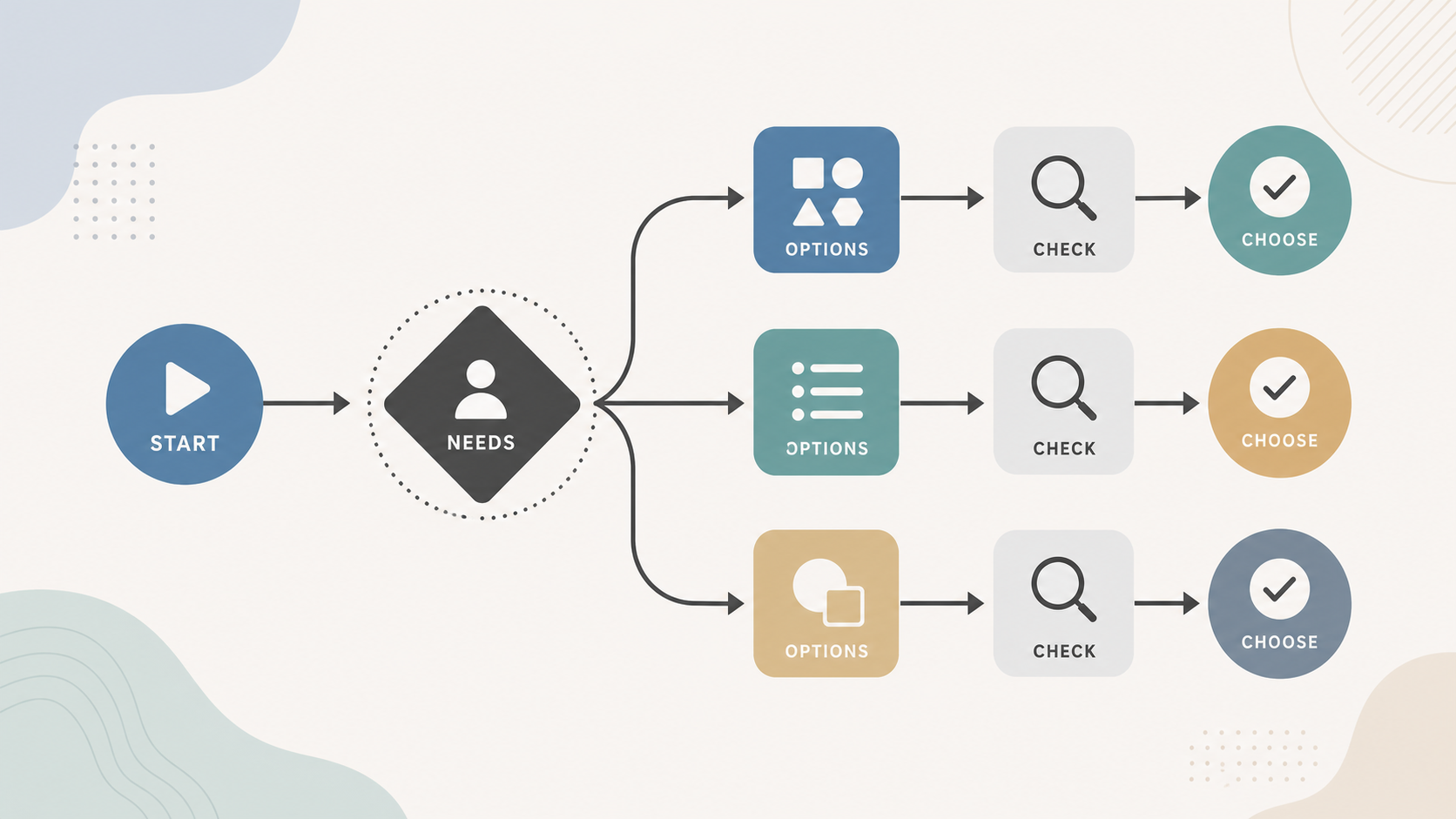
AI-generated generic editorial illustration — not a retailer product photo and does not depict the reviewed product or service. Provide a neutral visual comparison that supports the reader's decision without depicting a real product.
 Marks & Spencer’s published size guidance gives shoppers a clear measurement framework. For men’s shirts, it uses neck size and also lists chest and sleeve measurements. Its measuring advice covers the collar, chest, waist and inside leg, as well as body length and overarm measurement where relevant to jackets and tailoring.
That approach can be practical when you already know your measurements or can take them at home. Rather than relying only on S, M or L, you can begin with the measurements most relevant to the garment: neck and chest for a shirt, for example, or waist and inside leg for trousers. For shoppers who regularly find standard trouser lengths awkward, it is also worth checking whether the specific style is offered in an additional length.
The important qualifier is that Marks & Spencer says fit can vary by cut and style, and its additional-length options apply to a selection of styles rather than every item. A general chart should therefore be treated as a filter, not a promise. Open the product page, confirm the stated fit and length, and compare the listed details with a garment you already wear comfortably.
Uniqlo: size information and practical strengths
Uniqlo’s customer guidance sets out several ways to investigate size before buying. It links shoppers to instructions on taking body measurements, measuring clothing and using size charts for men, women, children and babies. It also includes categories such as tops, bottoms, shoes and accessories for garment measurement.
This can be particularly useful if you prefer to compare an online listing with a favourite basic at home. A body measurement helps identify a starting size, while a garment measurement can help you judge whether the intended cut is likely to be close-fitting, regular or roomier than an item you already own. The value is in doing the comparison, not in assuming that a label size will behave identically across every product.
Uniqlo also states that it revised its women’s body-measurement chart from the Autumn/Winter 2025 range to help customers select an appropriate size. The notice says the revision applies to women and that there would be no significant change to the size of products previously purchased. Because charts can be revised and individual styles differ, use the current product-specific information when ordering rather than relying on an older saved chart or past purchase alone.
Limitations: what the available evidence cannot confirm
A retailer-wide size guide cannot tell you whether a particular garment will feel right, suit your proportions or remain a favourite after repeated wear. The same stated size can produce a different experience when the cut, fabric weight, stretch content, rise, sleeve shape or finishing changes.
Independent reporting on denim illustrates why this matters. The report notes that comparisons can be difficult when manufacturing methods differ, and cites weave density and stretch content as factors linked to sagging or loss of shape. It also reports an observation that a Uniqlo straight-cut jean began to lose shape in key areas after wear. That is useful context for evaluating that type of garment, but it is not evidence that all Uniqlo jeans—or any Marks & Spencer jeans—will perform in a particular way.
Care is similarly item-specific. The report links good denim’s ability to hold shape and reduced washing needs to a different relationship with the garment, but it does not supply a product-level ranking for these two retailers. Before purchasing, inspect the exact UK listing for fibre composition, stretch content, care instructions, current stock and current return conditions. If a detail is missing or unclear, fit, durability and value remain uncertain.
Side-by-side comparison for everyday basics
The most useful comparison is not “which brand is better?” but “which listing gives me enough information to make a confident choice?” Both retailers provide a route to sizing information, but the practical path differs.
| What to compare | Marks & Spencer | Uniqlo | What it does not establish |
|---|---|---|---|
| Starting point for size | Published guidance for measurements including neck, chest, waist and inside leg | Body-measurement guidance and size charts | Guaranteed fit |
| Checking the garment | Confirm fit and style on the individual product page | Compare body guidance with garment-measurement guidance where available | Whether the cut will suit every body shape |
| Length and proportions | Some styles may be available in additional lengths | Check the current item’s measurements and intended cut | That every style has equivalent options |
| Revisions and availability | Verify the current listing because fit varies by cut and style | Current charts matter, including after the women’s chart revision | Stable sizing across all seasons or categories |
Use the table as a shopping method rather than a scorecard. If you want a quick measurement route for shirts or trousers, Marks & Spencer’s guidance may be a useful first filter. If you enjoy comparing a garment you own with product measurements, Uniqlo’s separate measurement pathways may be more useful. In either case, the exact item still decides the outcome.
Before checkout, take four small steps:
- Measure yourself and note the measurements that matter for the garment.
- Compare the current product chart with a basic that already fits well.
- Read the fibre composition and care instructions, especially for denim and stretch fabrics.
- Review the current UK returns terms before ordering if you are unsure between sizes.
[CTA: Compare your measurements before you buy]
Alternatives if neither retailer fits your priorities
Look beyond both retailers when your priority is more specific than a general everyday basic. If jeans are the focus and you want detailed advice on fit, fabric or repair, a specialist denim retailer may offer more useful product-level information or an in-person fitting experience. That is not automatically a guarantee of better quality; it simply gives you another route to inspect the exact construction and ask questions before buying.
Secondhand can be a sensible option when lower waste, a broken-in feel or access to older cuts matters most. It also lets you assess the actual garment’s measurements and condition rather than relying only on a standardised chart. Check areas prone to wear, such as knees, seams, pockets and waistbands, and allow for the possibility that previous washing or alterations have changed the fit.
Local try-on options are worth considering if fit certainty is your main concern. The independent denim reporting highlights that weave density, stretch content and care can influence shape retention, so inspect the composition and care label item by item. If easy care or long-term shape matters more than a particular logo, make those details the deciding factors.
How to choose the right everyday basic
Start with the basics that already work. Keep a short record of the body measurements and garment measurements of shirts, jeans or trousers that you reach for repeatedly. Include details such as waist, inside leg, chest width, sleeve length and the fit you prefer. This gives you a more reliable comparison point than label size alone.
Then decide how you will use the new item. A work shirt, relaxed weekend jean and travel trouser may need different cuts and care routines. Compare your reference garment with the current product information, paying attention to fibre content and washing instructions as well as size.
Choose Marks & Spencer when its relevant size and length guidance gives you a clearer starting point for the item. Choose Uniqlo when its body and garment measurement information makes comparison easier. If neither listing answers your practical questions, do not treat the uncertainty as a reason to guess: try in store, order only where the current return terms work for you, or look for a better-documented alternative.
Frequently Asked Questions
Is Marks & Spencer or Uniqlo better for everyday basics?
Neither retailer can be called universally better from the supplied evidence. Marks & Spencer provides measurement guidance including neck, chest, waist and inside leg, while Uniqlo provides body-measurement, garment-measurement and size-chart routes. Pick the specific item whose information helps you assess fit most clearly, then check fabric, care and current terms on that listing.
How should I compare Marks & Spencer and Uniqlo sizing before ordering online?
Measure yourself first, then use the current product information rather than relying on a familiar letter size. For Marks & Spencer, focus on the measurements relevant to the garment and check whether the particular style has an additional length. For Uniqlo, compare body guidance and, where useful, garment measurements with a similar item you already own.
Can a size chart tell me whether a basic will keep its shape?
No. A size chart can help you choose a starting size, but it cannot confirm shape retention or durability. Independent denim reporting points to factors such as weave density and stretch content as relevant to how denim may wear. Read the exact item’s composition and care guidance, and avoid assuming that one retailer-level chart predicts performance.
What should I check about fabric care before buying jeans or other repeat-wear basics?
Check the fibre composition, stretch content and care instructions on the exact listing. For denim, the independent reporting suggests that construction and care can matter to shape retention and washing needs. Use that as a prompt to examine the garment’s details, not as proof that any named retailer will perform the same way across its range.
Sources
Related reading
- Best UK high-street brands for wardrobe essentials: evidence-led top choices
- Marks & Spencer clothing review: strengths, limits and practical alternatives
- Uniqlo UK clothing review: who it suits and where the trade-offs sit
- How to choose everyday clothing: fit, fabric, care and returns checked in order
Editorial information: About our editorial team · Read our editorial policy · Read our affiliate disclosure.