Building an everyday wardrobe is less about finding a universal “best” retailer and more about finding the information you need before you buy. For fit-sensitive essentials, the most useful starting points in the supplied evidence are Marks & Spencer’s measurement guidance and Uniqlo’s current size-information guidance. Next and John Lewis can still belong on a shortlist, but the decision should be made from the live product page rather than a retailer-wide assumption.
The Short Verdict
Start with Marks & Spencer if you want published guidance that helps you take and use body measurements across practical wardrobe categories. Start with Uniqlo if you want to check the current product sizing information carefully, especially when comparing a new purchase with older women’s items.
That is a qualified verdict, not a league table. The available evidence documents M&S measurement and length guidance, and Uniqlo’s size-information process and women’s chart revision. It does not independently test the four retailers’ garments for durability, value or consistent fit. For Next and John Lewis, keep them in your comparison set, then assess the specific item you are considering.
A useful essential is a piece you expect to wear repeatedly: a shirt, knit, pair of jeans, trousers or outer layer that works with the rest of your wardrobe. The practical question is therefore: can you establish the right size, understand the garment details and make a return decision before checkout?
How We Compared the Four Retailers
This guide treats wardrobe essentials as repeat-wear purchases rather than trend-led finds. The comparison focuses on the information that can make an online purchase easier to judge: body and garment measurements, fit and length notes, fabric and care details, return conditions, and the price of the exact item.
The evidence has an important limit. Retailer size guides are useful primary sources for what those retailers publish, but they are not independent product tests. A clear measuring guide does not guarantee that every shirt, jean or jacket will suit every body shape; cut, fabric, intended ease and styling can still change the result. Likewise, an editorial shopping article can show which other retailers appear in a fashion-shopping context, but an item listing is not proof that one brand is better overall.
Use each product page as the final decision surface. Check the item’s current size chart, composition, care instructions, available lengths, delivery and return terms, and reviews where they are available. Compare like for like: two black knits at similar prices may differ substantially in fibre content, construction details and care requirements.
Marks and Spencer: Best for Measurement-Led Fit Shopping
Marks & Spencer is the clearest documented starting point here for shoppers who want to begin with measurements rather than a familiar letter size. Its size-guide area covers categories including shirts, jeans, knitwear and outerwear, and its published measuring advice explains how to take collar, chest, waist, inside-leg, body-length and overarm measurements.
That detail is particularly practical when buying structured everyday pieces. For example, the M&S guide says men’s shirt sizing is determined by neck measurement rather than standard S, M and L sizing. It also notes that fit can vary with cut and style, and that some styles are offered in additional short and long lengths. Those are prompts to check the specific garment guide, not reasons to assume a standard fit across the range.
Use the guidance as a preparation tool. Take measurements with a tape, note the length you normally need, then compare them with the live guide for the product you want. If you are between sizes, look for the garment’s stated fit or customer feedback and consider whether you prefer closer or easier layering room. The supplied evidence supports the availability of measurement guidance; it does not establish that M&S garments offer the best quality, value or fit for every shopper.
Uniqlo: Best for Checking Current Size Information
AI-generated generic editorial illustration — not a retailer product photo and does not depict the reviewed product or service. Make the current-size-information checking framework immediately scannable.
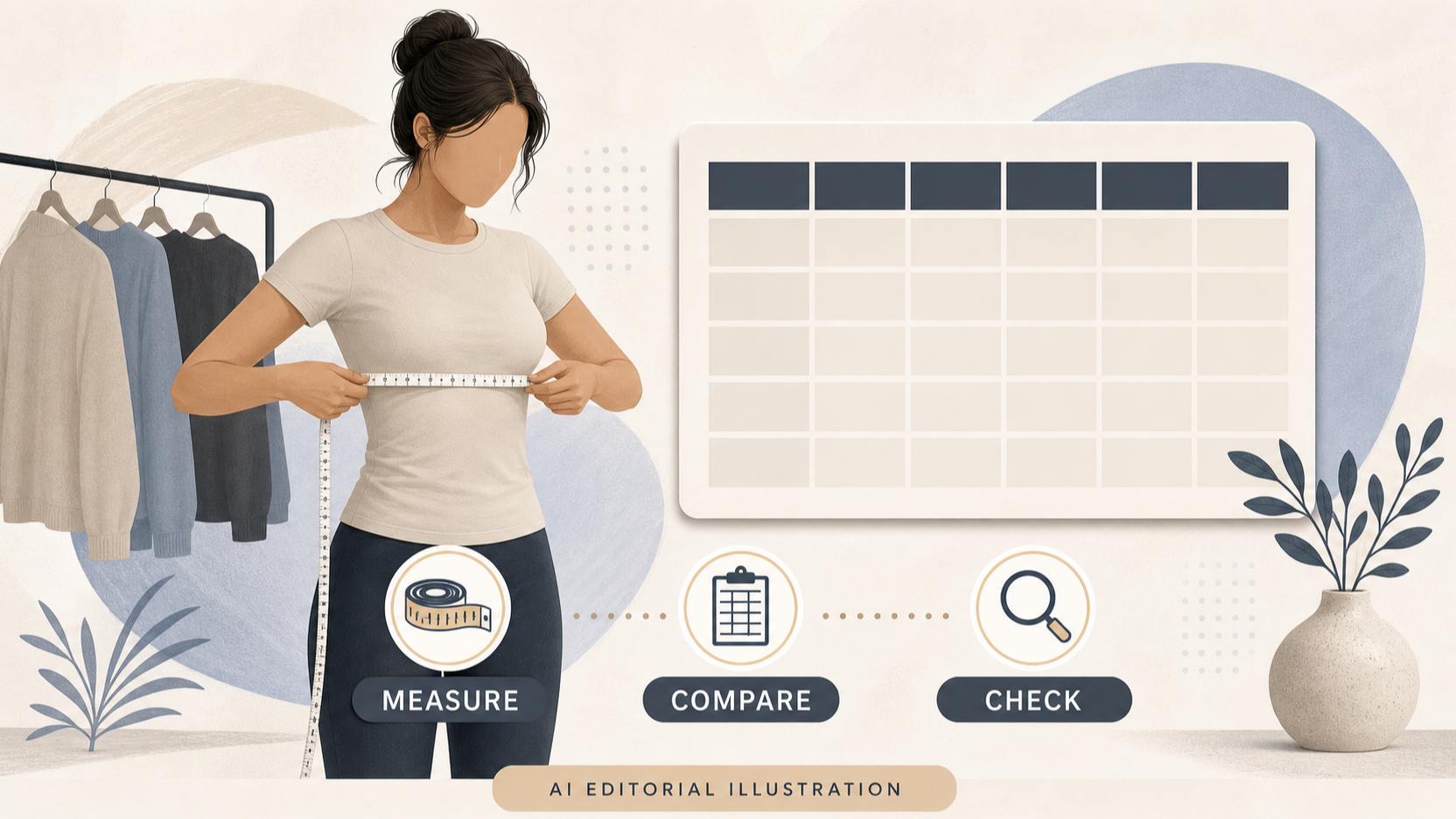 Uniqlo is the stronger documented route for shoppers who want to verify current sizing information before ordering. Its UK customer-service guidance explains how to find measurements, how to take body measurements and how to measure clothing. It also directs shoppers to size charts for different groups and product types.
The most important current context is Uniqlo’s stated revision to women’s body measurements starting with the Fall/Winter 2025 product line-up. The guidance says the revision applies to women only and is intended to help shoppers select an appropriate size. It also says there will be no significant changes to the size of products already purchased, but that should not replace a check of the current item page.
Use a three-step check. First, measure your body. Second, open the current chart for the exact product, rather than relying on an old order or a saved size label. Third, compare the product’s garment details and intended fit with what you own already. This is especially helpful when you are buying a different cut or fabric, where the same label may feel different in practice.
Next and John Lewis: Useful Options, but Verify the Product Page
Next and John Lewis remain sensible places to compare everyday clothing, but the supplied evidence does not support a retailer-level verdict for either one. Treat both as product-by-product decisions.
Before buying, open the exact item page and make a short comparison note. Record the available sizes and lengths; read the size guide attached to that item; check the fibre composition and care instructions; and review the current delivery, return and refund terms before paying. If a page gives a fit description, use it alongside your measurements rather than in place of them.
It is also worth comparing the same kind of item across retailers on the same day. For a knit, compare composition and washing instructions as well as price. For trousers, compare rise, inseam or length information, and the stated fit. For a jacket, consider the layers you expect to wear underneath. If essential detail is absent or unclear, the lower-risk choice is to pause, contact the retailer or choose an item with clearer information.
Alternatives Worth Checking Alongside the Main Four
If the main four do not match your preferred style, price point or product type, widen the search deliberately rather than assuming the shortlist is complete. The supplied independent editorial coverage includes product listings from River Island, Zara, ASOS Design, COS, Massimo Dutti, Mango and Damson Madder.
Use those names as prompts for further comparison, not as an alternative ranking. Their appearance in editorial product listings does not prove that they will provide better essentials, sizing or value than the four retailers considered above. The same checks still apply: assess the current product page, measurements, composition, care information and returns.
A wider search can be useful when you need a particular silhouette, fabric or price range. Keep the comparison narrow by choosing one category at a time—such as a merino knit, straight-leg jeans or a lightweight jacket—and comparing the detail that affects how often you will actually wear it.
The Practical Shortlist by Shopping Priority
Choose Marks & Spencer first when measurement-led shopping is your priority. Its published guidance gives you a clear starting set of body measurements and acknowledges that cut and style can affect fit. This is a useful route for shoppers who want to check neck, chest, waist, inside leg or jacket length before choosing an everyday item.
Choose Uniqlo first when you need to confirm current size information, particularly for women’s clothing after the stated Fall/Winter 2025 body-measurement chart revision. Measure first, then use the exact current product chart and garment information rather than assuming an older purchase maps perfectly to a new item.
For Next and John Lewis, make the shortlist item by item. Compare the live details for the specific shirt, knit, jeans or outerwear piece you are considering. Do not turn a general impression of the retailer into a fit, fabric, care, return or value claim for every product.
The best final choice is the one that gives you enough information to order with confidence and a clear return path if the fit is not right. A methodical comparison is more dependable than treating any brand as a universal winner.
Frequently Asked Questions
Should I rely on a retailer’s standard size label when buying wardrobe essentials online?
No. Use the label as a starting point, then compare your measurements with the current guide for the exact product. M&S notes that fit can vary by cut and style, while Uniqlo provides product and body-measurement guidance. A familiar size can be helpful, but it is not a fit guarantee.
What should I measure before ordering trousers, shirts or jackets online?
For the categories covered in M&S’s measuring advice, useful checks include collar, chest, waist, inside leg and body length. A shirt shopper may need neck and chest measurements; a trouser shopper may need waist and inside leg; and a jacket shopper may need chest and body-length information. Then check the item page for any fit or length notes.
Does a revised women’s size chart mean previously bought Uniqlo clothing will fit differently?
Not necessarily. Uniqlo says its women’s body-measurement chart revision begins with the Fall/Winter 2025 line-up and says there will be no significant changes to products already purchased. Still, use the current chart for the item you want: a different cut, fabric or intended fit can affect the practical result.
How can I compare care, returns and value when the evidence is product-specific?
Build a small like-for-like checklist. Compare composition, washing instructions, price, fit and length notes, and the current delivery and return terms for the exact products. Treat a retailer guide as information about that retailer’s published process, not proof of product quality or overall value. If the details do not answer your question, choose a clearer product page or seek confirmation before ordering.
Sources
Related reading
- Marks & Spencer vs Uniqlo: which is better for everyday wardrobe basics?
- Marks & Spencer clothing review: strengths, limits and practical alternatives
- How to choose everyday clothing: fit, fabric, care and returns checked in order
- How everyday clothes should fit, feel and perform before you decide to keep them
Editorial information: About our editorial team · Read our editorial policy · Read our affiliate disclosure.